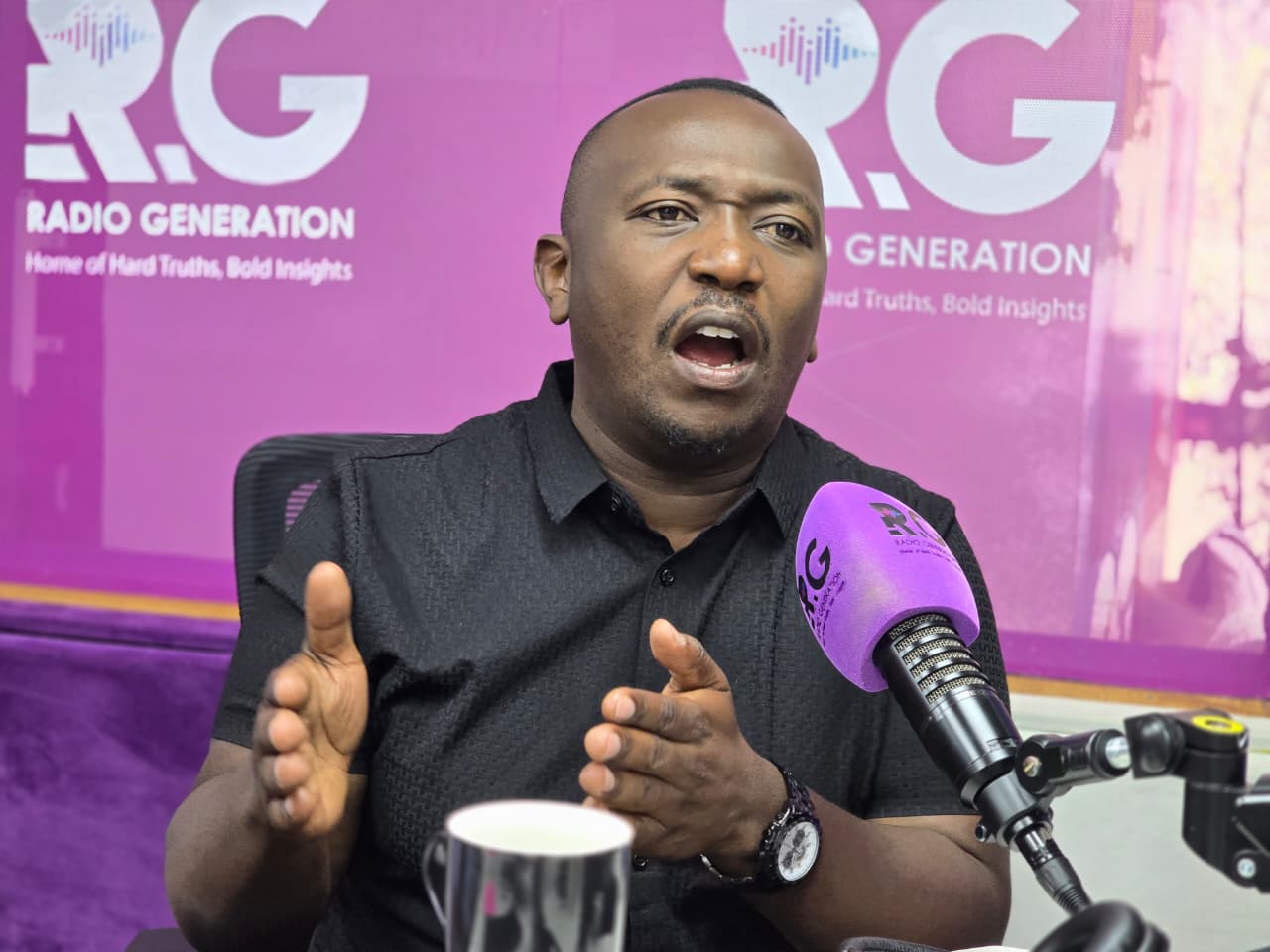
Lawyer and political analyst Fanya Mambo Kinuthia confirms the exit of IEBC CEO Marjan Hussein has revived concerns over procurement control, voter technology, and trust in elections.
He argues younger voters feel excluded, warns against undermining polling station results, and predicts legal and political turmoil within ODM and the Azimio coalition.
Speaking on Monday during a Radio Generation interview, Kinuthia described the IEBC CEO as central to procurement and staffing decisions, including ballot printing and the recruitment of returning officers.
“He’s the chief accounting officer; everything that happens in procurement, he has to oversee,” he said, adding that such authority makes the timing of Hussein’s exit significant.
The debate comes few weeks after the former IEBC CEO, Marjan Hussein's exit from IEBC in February 3, 2026, in what it described as a mutually agreed structured transition with the commission.
Marjan, who had served in the secretariat for over a decade and was formally appointed CEO in March 2022, stepped down with more than a year remaining on his contract.
The departure comes amid heightened scrutiny over the commission’s preparedness for the 2027 General Election and ongoing debates around electoral technology, procurement and internal governance.
IEBC Chairperson Erastus Edung Ethekon confirmed the exit, saying the decision marks the start of a process to recruit a new CEO and Commission Secretary.
The commission emphasised that its operations, including preparations for by-elections and the general election, will continue uninterrupted.
Following Marjan’s exit, the IEBC appointed Moses Ledama Sunkuli, Director of Electoral Operations, as Acting Chief Executive Officer and Commission Secretary to steer the secretariat during the transition period.
Kinuthia argued that removing Hussein would inevitably affect procurement and operations positively, negatively or in favour of the state or against the state and that the exit came at a time when young people increasingly feel alienated from the electoral body, which he described as outdated.
“We are in 2026, they’ve not taken cognisance that there’s a generation that registers for a bank on their phone,” he said, questioning why voter registration could not be similarly digitised. “Don’t give us stories of it’s not possible.”
He contrasted the IEBC’s approach with mobile banking, passport applications, and vehicle transfers, which he said are already largely online. “If the logbook of a whole Prado can be done online, why can’t you register as a voter online?” he asked.
According to Kinuthia, the problem is generational. He said more than 60 per cent of Kenyan voters are below 40, yet decision-making remains dominated by older officials.
“You can’t keep telling us that more than 60 per cent of the people who vote are below the age of 40, but the people who are making decisions are over 50,” he said.
He argued for a hybrid system reflecting Kenya’s demographics. “We have my grandmother, who wants to go physically, and a young person who believes that an app can do it,” he said. “Let us start changing the IEBC to look like an IEBC of 2026.”
On trust in the electoral process, Kinuthia said opposition confidence depends on respect for results tallied at polling stations.
“What we want as a bare minimum is respect for the sanctity of the paper that comes from that room,” he said, rejecting a mysterious server-based manipulation where votes go and start multiplying.
He insisted the opposition is prepared to win or lose, provided the process is fair. “We are okay with winning or losing as long as it is credible,” he said. “Don’t steal from us, and we won’t steal from you.”
Kinuthia was blunt about the IEBC chair, saying opposition figures do not have faith in Erastus Ethekon, but added they would work with existing structures.
“Even if Ruto makes his own brother the IEBC chairperson, we are not afraid of facing William Ruto at the ballot,” he said, so long as the will of Kenyans is respected.
Turning to coalition politics, Kinuthia responded to claims that Azimio is nothing without ODM. “Why are you worried about our nothing?” he asked, dismissing the criticism.
He outlined legal hurdles should ODM seek to exit Azimio, noting the requirement for a National Executive Committee decision and a three-month notice to the Registrar of Political Parties. “By law, they must give a three-month notice,” he said.
He predicted internal division, with some members aligning with President Ruto while others remain in Azimio.
“For the first time in Luo Nyanza, some people will vie on Azimio, and others will vie on ODM,” he said, warning the law does not allow dual coalition membership.
Kinuthia concluded that electoral truth remains constant. “Whether you’ve won or lost, the truth is a constant,” he said, adding that only transparent elections can restore public confidence.































Comments
Sign in with Google to comment, reply, and like comments.
Continue with Google